Introduction
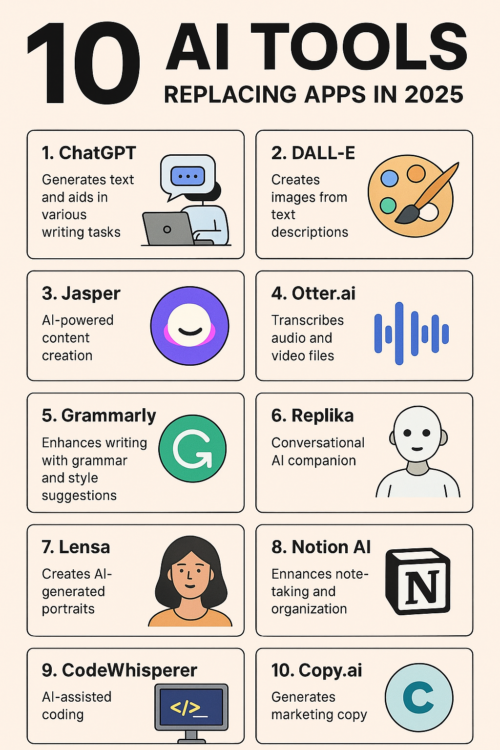
As we move further into 2025, artificial intelligence is reshaping the way we work, create, and organize our lives. Instead of relying on dozens of separate apps, many people now use multifunctional AI tools that combine creativity, productivity, and problem-solving in one place. These tools don’t just improve existing tasks—they completely transform them. Below is a look at ten influential AI tools reshaping the app landscape in 2025.
1. ChatGPT
ChatGPT has evolved into a universal assistant capable of writing, brainstorming, researching, summarizing, and even helping with productivity tasks. What used to require multiple apps—note-taking apps, writing assistants, idea generators—is now managed through one conversational tool.
2. DALL·E
Instead of using design apps or complicated editing software, DALL·E lets users create detailed images just by describing what they want. Whether for school projects, marketing content, or social media posts, AI-powered image generation has become faster and more accessible than traditional design tools.
3. Jasper
For businesses and creators, Jasper has replaced many content-creation platforms. It helps generate articles, social posts, ads, and creative ideas instantly, making it a powerful alternative to traditional content-writing apps.
4. Otter.ai
Transcription apps used to require long manual editing sessions, but Otter.ai now produces quick, accurate transcriptions for audio and video files. Students and professionals use it to capture meetings, lectures, and interviews with ease.
5. Grammarly
While spell-checkers existed before, Grammarly’s AI-powered writing suggestions go far beyond grammar correction. It refines tone, clarity, and style, replacing multiple editing tools with a single smart assistant.
6. Replika
Replika provides emotional support and conversation practice through an AI companion. Instead of social apps or journals, many people use Replika to reflect, talk through their day, or build communication skills in a safe environment.
7. Lensa
AI-generated portraits became mainstream thanks to Lensa, which makes creative profile photos and stylized images without needing photo-editing skills. It has replaced many mobile editing apps for users who want instant high-quality visuals.
8. Notion AI
Notion AI enhances productivity by combining note-taking, planning, organization, and AI-generated summaries. Instead of switching between planners, calendars, and task apps, users now rely on an all-in-one intelligent workspace.
9. CodeWhisperer
For coders, CodeWhisperer speeds up development by suggesting and completing code. It offers explanations, fixes errors, and enhances productivity, reducing the need for multiple debugging or documentation tools.
10. Copy.ai
Marketing teams now use Copy.ai to generate ideas, slogans, email campaigns, and product descriptions. It replaces older marketing apps that required manual writing and editing, making content creation significantly faster.
Conclusion
By 2025, AI tools are no longer optional—they are essential. Each of these technologies replaces several traditional apps by offering faster, smarter, and more personalized solutions. As AI continues to evolve, the line between creative assistant, productivity tool, and problem-solver becomes increasingly blurred. The result is a more efficient digital world where one intelligent tool can accomplish what once required an entire folder of apps.